AI Policy Designer for Smart Policy Modelling
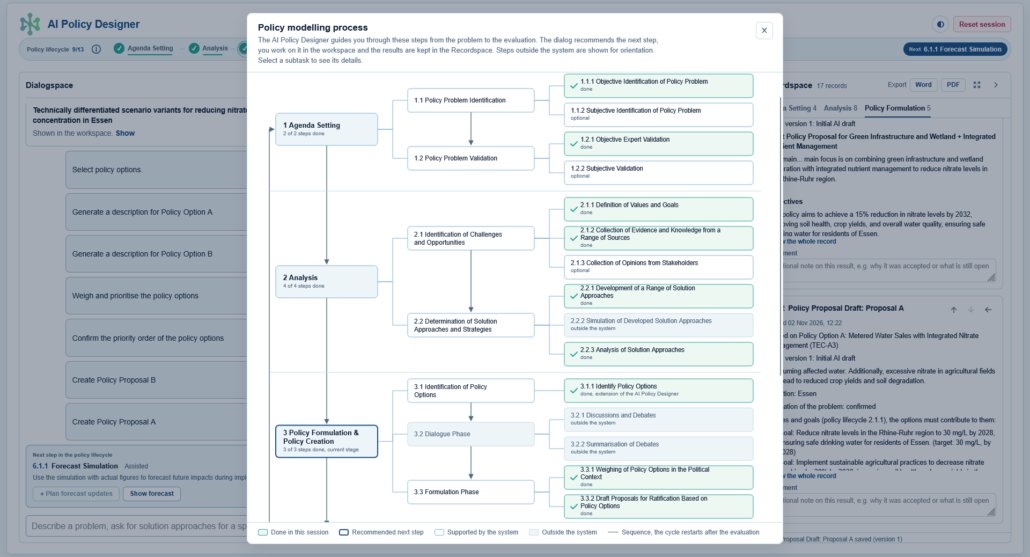
Public administrations face complex problems such as drought, falling groundwater levels and water quality, where many interests meet and decisions have long-term effects. Policy-making is a structured process: a problem is put on the agenda, analysed, turned into policy options, decided, implemented and monitored. In practice, however, the evidence for each step is spread across studies, statistics and expert knowledge. It is hard to keep track of which steps have been taken and on what basis a proposal was made.
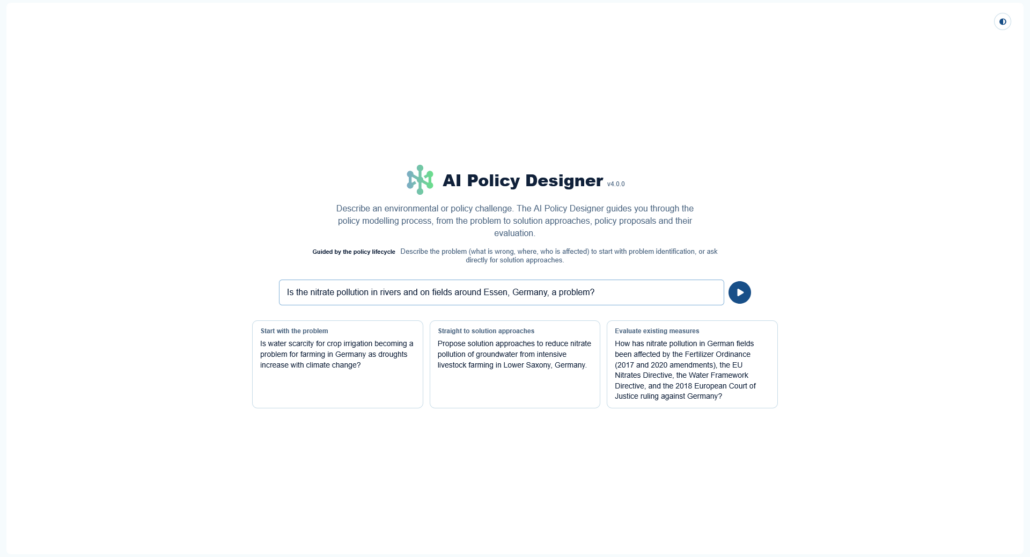
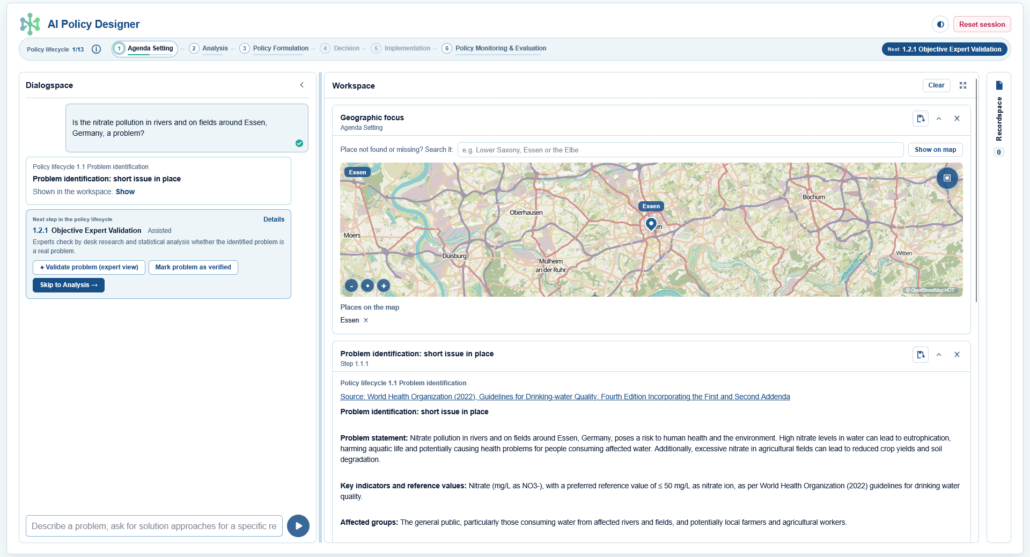
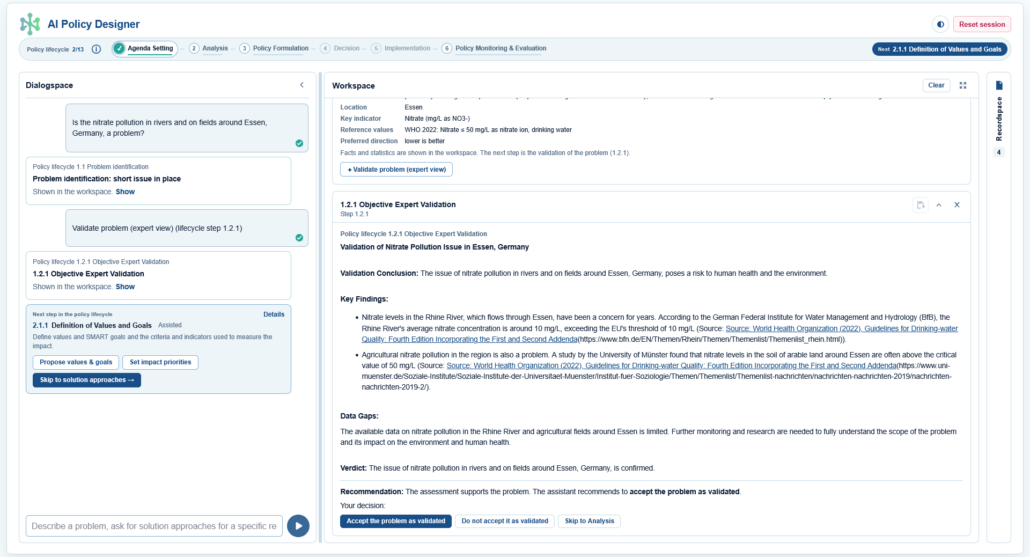
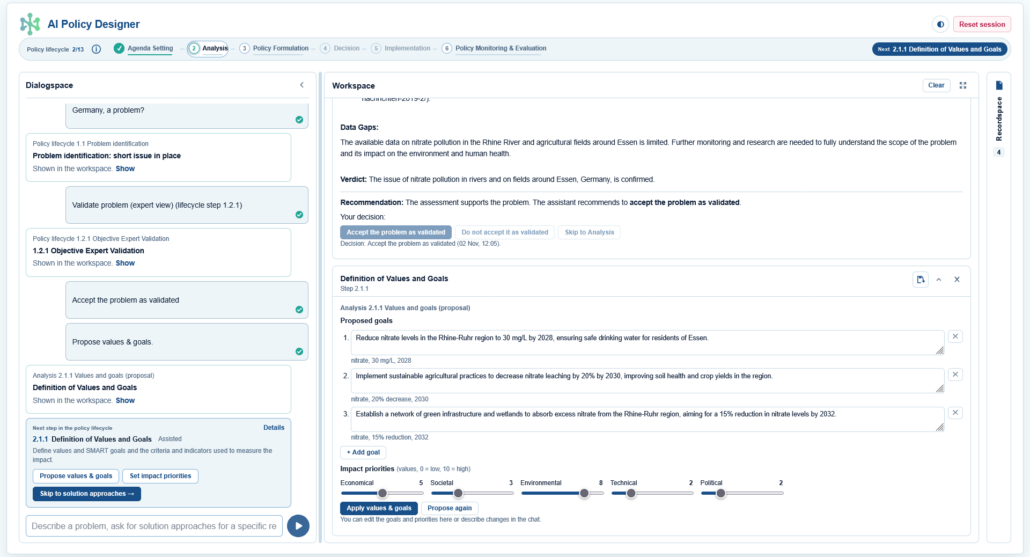
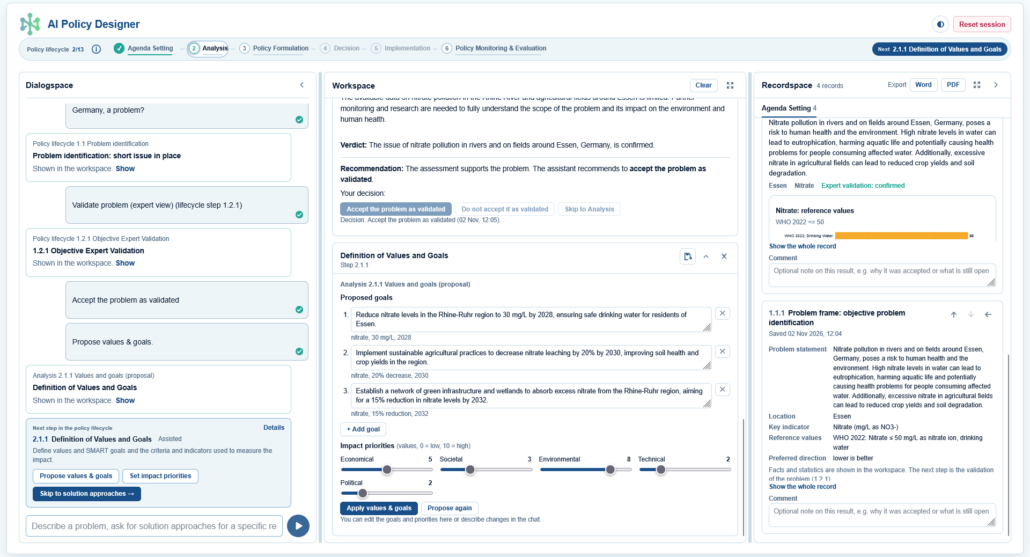
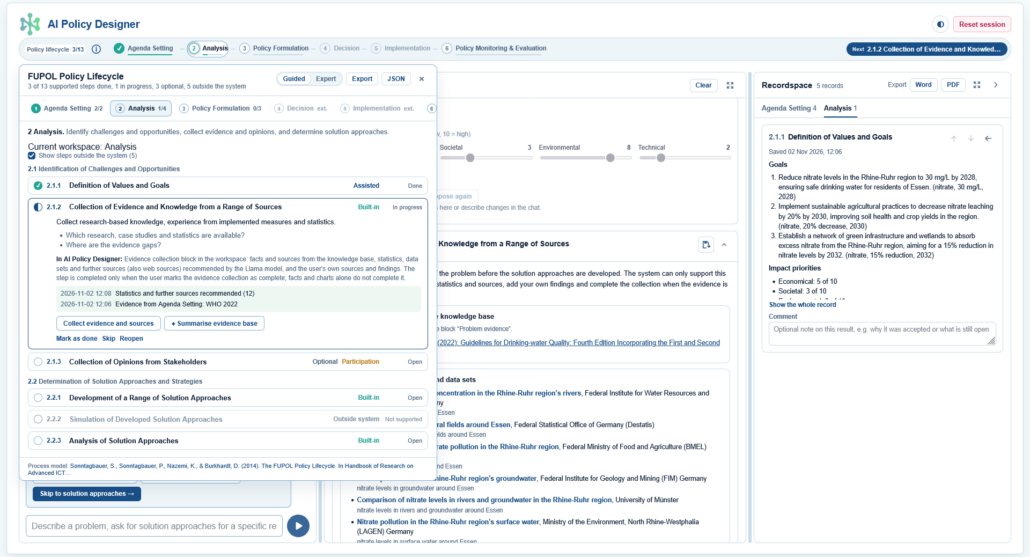
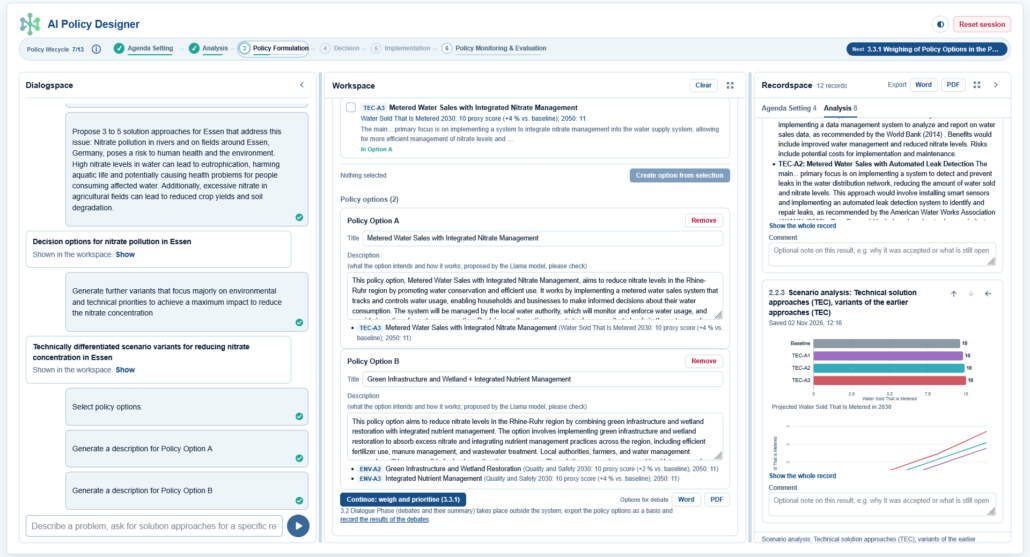
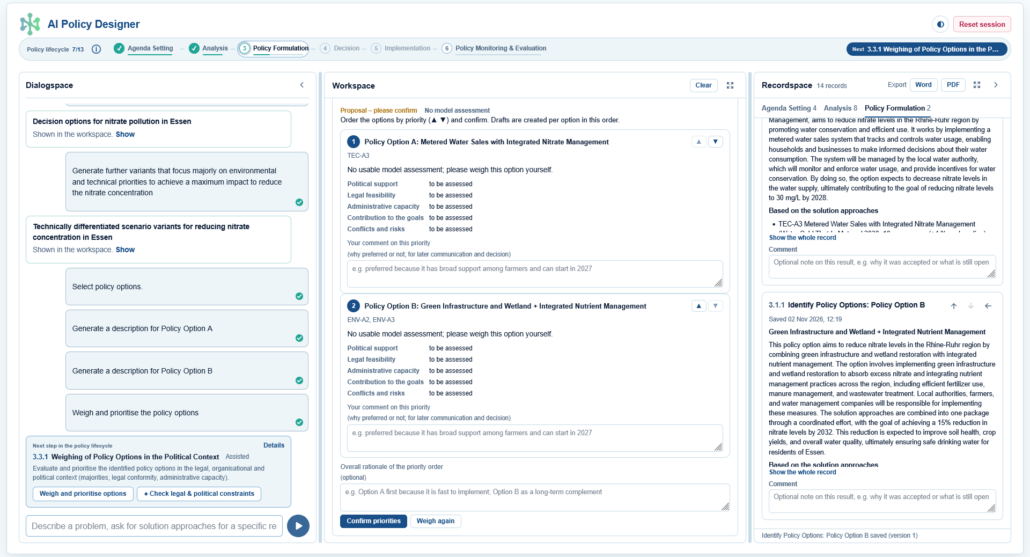
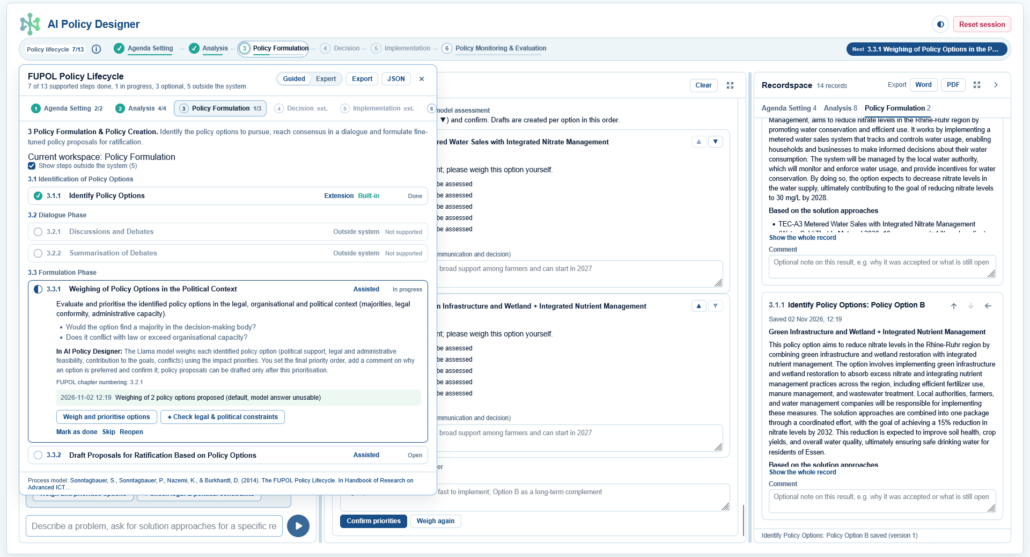
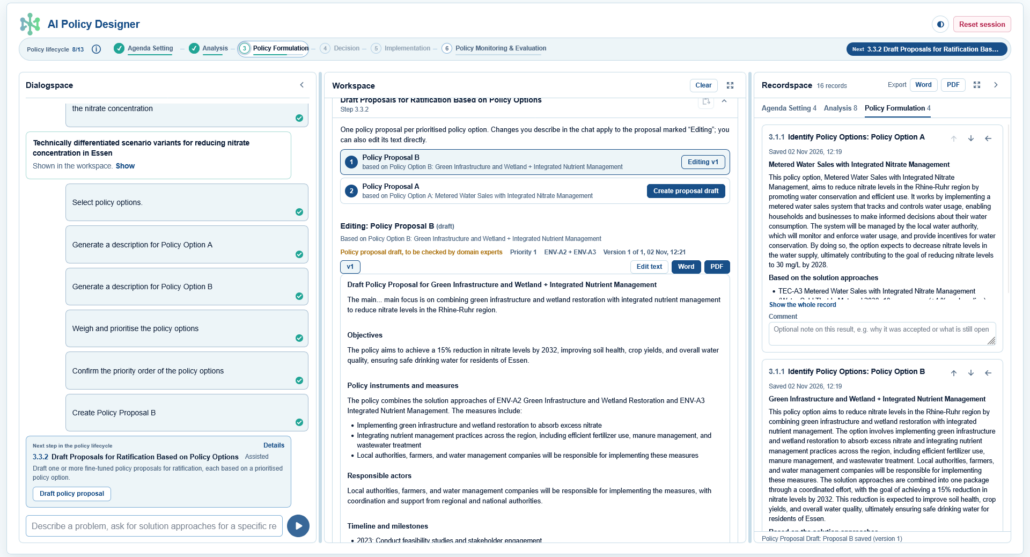
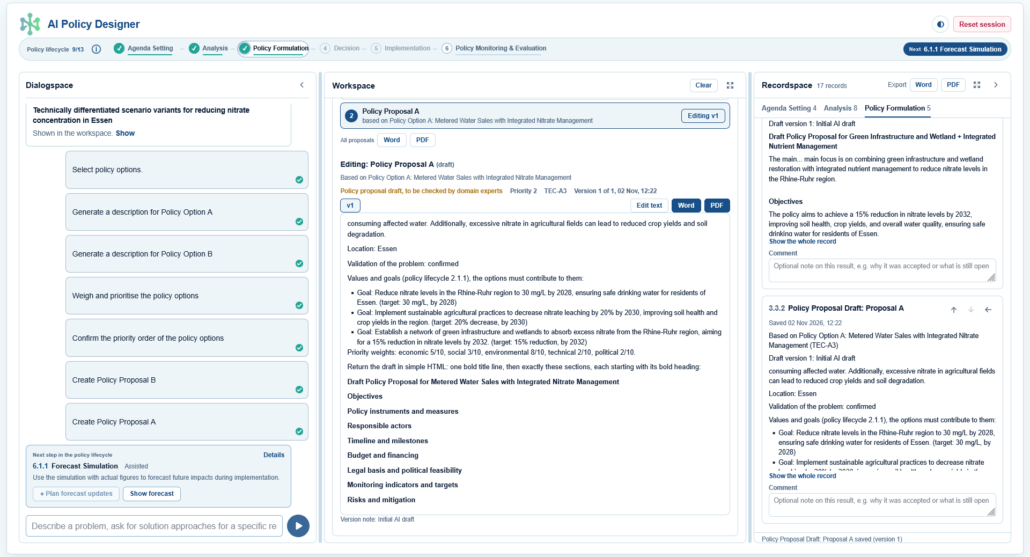
The AI Policy Designer supports policy makers and analysts along this process. It is based on the FUPOL Policy Lifecycle, which describes policy-making in six stages with 19 subtasks. In a dialogue with an own set up large language model (Llama), users describe a problem and work through the stages step by step. The model’s answers are grounded in curated knowledge bases built only from established scientific sources. Examples are the Thünen Institute, UFZ, the German Environment Agency, the Joint Research Centre and the European Environment Agency. The current knowledge bases cover agricultural irrigation under climate change and water quality.
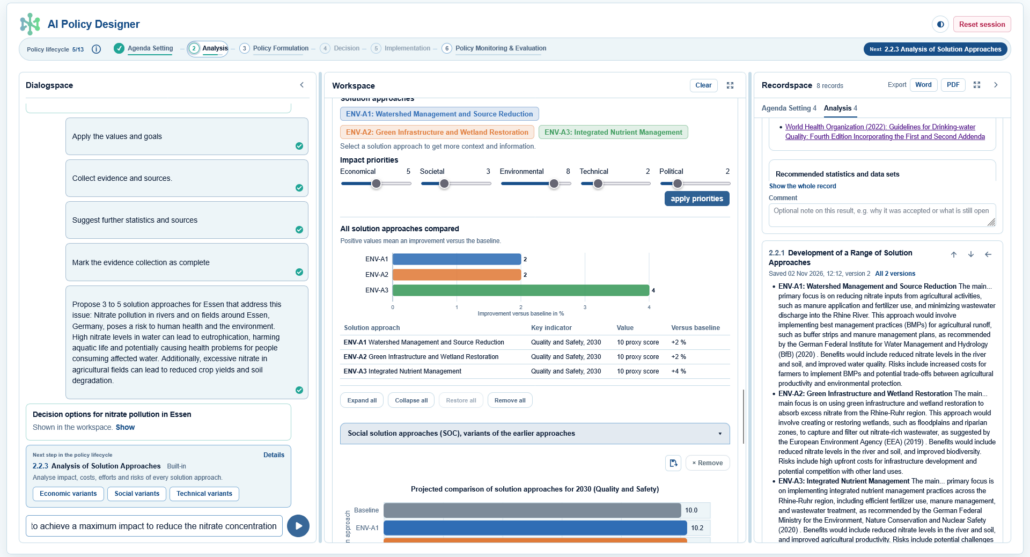
AI is involved in every step, but it does not work as a free-form chatbot. A retrieval-augmented generation (RAG) layer connects the Llama model to machine-readable domain knowledge: indicator rules with units and target directions, regulatory thresholds and reference values, scenario projections up to 2100, rules for how environmental effects spread to economic, social and political ones, and a source registry with DOIs and BibTeX entries. For each request the system selects the relevant indicators and sources and passes them to the model with the user’s question. The model answers in a structured format that the application checks and turns into interactive elements.
Expected benefits
- Faster and evidence-based preparation of policy decisions
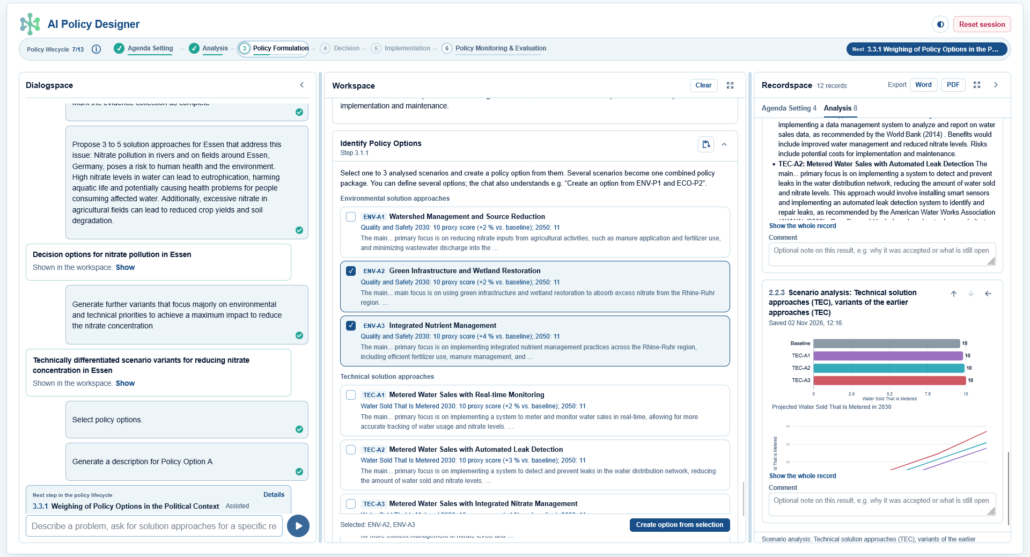
- Transparent documentation of how a proposal was developed
- Comparable solution approaches and policy options based on scenarios
- Guidance through the policy lifecycle, showing gaps and the next sensible step
| Category | Web-Solution + AI |
| Current Version | 4.x |
| Language | English |
| Status | Prototyp |
| Authors | h_da | vis research group |